


ATS Job Search Guide & Free Resume Scan

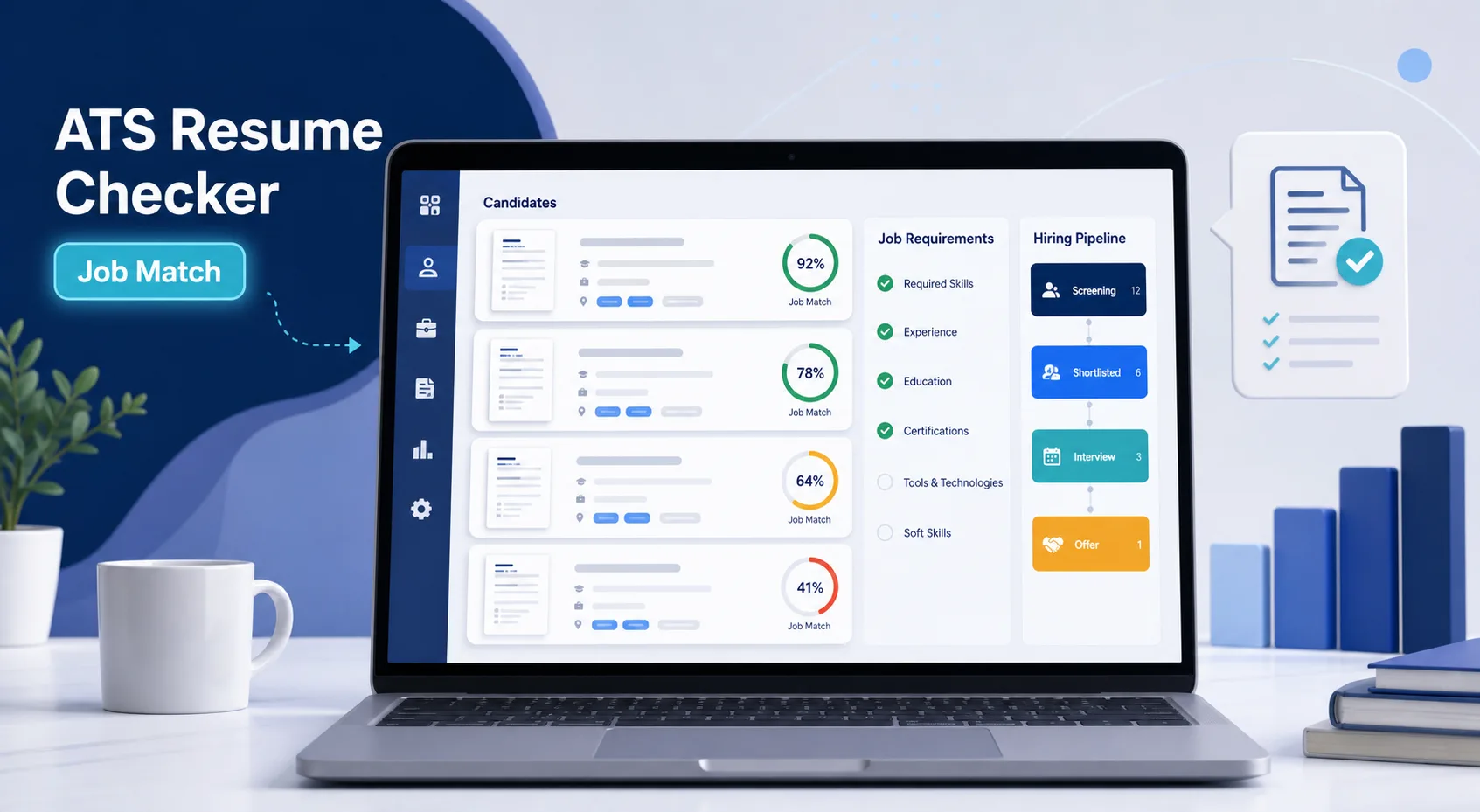
Quick answers about ATS job search
What is an ATS job search?
An ATS job search compares your truthful resume evidence with the requirements of one real vacancy before you apply. It helps identify relevant wording and missing evidence without guaranteeing selection.
Can I scan my resume for free?
Yes. Hirings Online provides one guest ATS-style resume scan without registration. Upload a readable PDF or DOCX and paste the complete job description. Run the free resume scan.
How does ATS resume matching work?
The checker compares readable resume text with important terms in the job description and reviews common section and formatting signals. Employers may use different systems and private rules.
Does a high ATS score guarantee an interview?
No. A score cannot verify qualifications, work authorization, interview performance, or an employer's private screening questions. Human review remains essential.
An ATS job search works best when a candidate uses one real job description to make relevant experience easier to find. Resume checker and candidate matching tools can compare readable evidence with role requirements, but they should support rather than replace human hiring judgment.
Hirings Online uses explainable match signals so candidates and recruiters can review matched terms, missing evidence, profile completeness, and job-specific context instead of relying on an unexplained number.
What Is an ATS?
An Applicant Tracking System, usually called an ATS, is software that helps employers collect job applications, organize candidates, and manage hiring stages such as screening, interview, shortlist, and offer. A resume checker is one feature inside this wider workflow. It looks at resume or profile content and compares it with the job post.
For candidates, this means a clear and complete profile matters. For employers, it means the job description needs to include real requirements, not vague wording. The stronger the information on both sides, the better the match result can be.
Read the job
The matcher studies the job title, role, skills, experience, education, tags, and description to understand what the employer needs.
Read the profile
It checks the candidate profile, skills, work history, education, profession, and other available career details.
Explain the match
The employer sees a score plus matched and missing signals, making the review easier to understand.
How Job Matching Works on Hirings Online
The first version of the Hirings Online matcher is designed to be explainable. It does not simply show a number. It shows why a candidate may be a strong match or why the profile may need more review.
Strong match: the profile has close overlap with the job requirements and should be reviewed quickly by the employer.
Good match: there are several relevant signals, but the employer should check missing keywords and profile details.
Needs review: the candidate may still be suitable, but the profile does not clearly show enough job-specific evidence.
Why This Helps Employers
Recruiters often receive applications with different formats and different levels of detail. A job matcher helps bring the first review into one consistent screen. Employers can still open the full candidate profile and resume, but the score gives them a faster starting point.
- Shortlist candidates with clearer evidence of job fit.
- Find skills that match the job description.
- Notice missing profile details before making a decision.
- Keep applications organized inside the hiring dashboard.
- Reduce manual screening time without removing human judgment.
How Candidates Can Improve a Resume Job Match
Candidates do not need to write for machines. The best approach is to write a clear, honest, and complete profile that reflects real experience. If you are applying for a graphic designer role, mention tools, portfolio type, branding experience, social media design, UI work, print design, or industry experience only when it is true.
Candidate profile checklist
- Add a professional summary that explains your target role and strongest skills.
- Complete your skills section with tools and abilities you can confidently discuss.
- Use job-relevant words naturally, such as "customer support", "Laravel", "data entry", "graphic design", or "sales executive".
- Keep work experience specific: responsibilities, tools used, industries served, and measurable achievements where possible.
- Update education, location, availability, and contact details so employers can understand your fit quickly.
A Practical ATS Job Search Workflow
Do not scan one general resume against dozens of unrelated vacancies. Choose a role you genuinely qualify for, save the complete job description, and compare it with a role-specific resume version. Review the missing terms as questions, not instructions: do you have that skill or experience, and is the evidence already visible?
- Check eligibility first. Confirm the location, remote-country restrictions, experience level, deadline, and work authorization before editing a resume.
- Identify the core requirements. Separate must-have responsibilities and skills from optional preferences.
- Match evidence, not isolated words. Add a term only when a project, result, qualification, or responsibility supports it.
- Keep a readable structure. Use conventional headings, simple dates, selectable text, and concise bullet points.
- Review as a person. Read the finished resume without the score and ask whether a recruiter can understand your fit in under a minute.
Role-Specific ATS Keyword Examples
The useful keywords come from the vacancy, not from a generic online list. A customer-support role may mention ticketing, escalation, response time, and CRM records. A graphic-designer role may ask for brand systems, Adobe Illustrator, social assets, print production, or a portfolio. A Laravel developer role may require PHP, REST APIs, MySQL, Git, testing, and framework-specific experience.
A truthful resume connects those terms to evidence. Instead of listing “customer service” alone, a candidate might write that they handled a daily ticket queue, documented resolutions in a CRM, and improved first-response time. The exact wording must remain accurate to the candidate's work.
Common ATS Myths to Avoid
- Myth: more keywords always produce a better resume. Repetition without evidence can make a resume less credible and harder to read.
- Myth: one ATS score is universal. Employers configure different workflows, questions, filters, and review practices.
- Myth: visual design is always rejected. Readability matters more than decoration. Use a clear layout and verify that important text remains selectable.
- Myth: the checker can confirm your chance of being hired. It cannot assess every candidate, private rule, interview, reference, or business decision.
Important Note About Fair Hiring
An ATS score should support hiring decisions, not replace them. A lower score does not always mean a candidate is weak. It may mean the profile is incomplete, the resume uses different wording, or the candidate has transferable experience. Employers should always review promising candidates manually before making final decisions.
What an ATS Match Score Cannot Tell You
A score cannot verify whether every claim is true, measure interview performance, understand every transferable skill, or reproduce an employer's private screening process. Use it to find unclear or missing evidence, then read the resume as a person would. Our practical guide to matching your resume to a job description includes an evidence worksheet and before-and-after examples.
Start with a stronger profile or job post
Candidates can compare a resume with a real job description, create a readable role-specific version, complete their profile, and browse current jobs. Employers can publish detailed job posts so candidate matching has better information to review.
Scan your resume free Build a resume- Share This Job

Write A Comment
No Comments